
Switching From a Tank to a Tankless Water Heater in an Older Rhode Island Home
Most older Rhode Island homes need gas line, venting, or electrical upgrades before a tankless water heater will work. Here is how to figure out what yours needs before you spend a dollar.
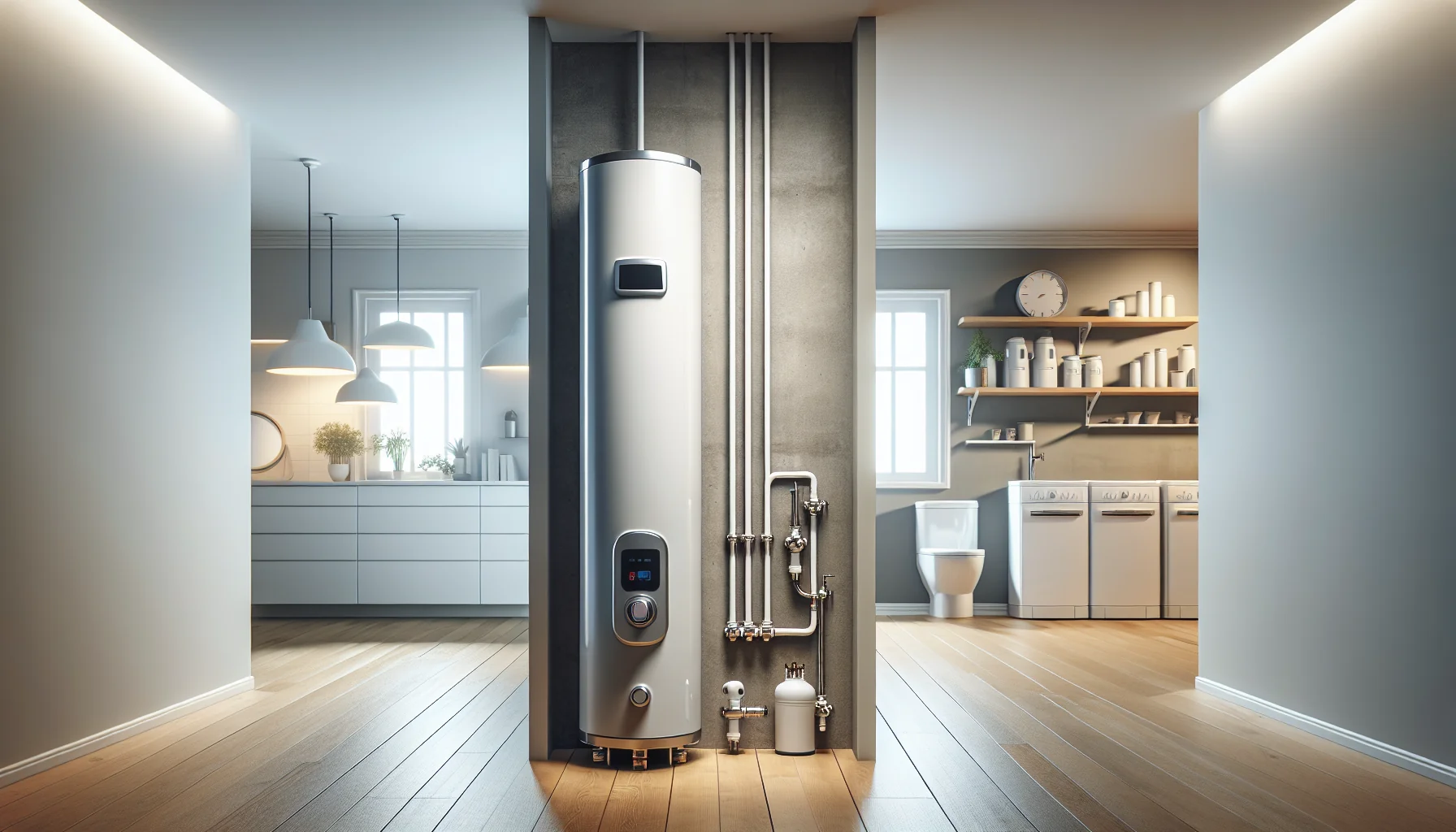
If you live in an older Rhode Island home — pre-1950 triple-decker, mid-century ranch, anything where the wiring still has a fuse box memory — the question isn't really tankless vs tank. It's whether your house can physically support a tankless without thousands of dollars in side work first.
This is the question we get most often at Kwik Plumbing & Heating, and the answer almost never matches what the big-box install ad promises. Here's how to figure out what your house actually needs before you commit.
The four things that decide if a tankless retrofit is realistic
A tank water heater is forgiving. It sits in the basement, sips fuel slowly, and reuses whatever gas line, flue, and electrical service the previous one used. A tankless is the opposite: it draws huge amounts of fuel for short bursts, vents differently, and often doesn't fit on the same circuit. In an older RI home, four things decide whether the swap is straightforward or a project:
- Whether your gas line can deliver the BTUs the unit needs
- Whether your electrical panel can handle it (for electric tankless)
- Where the unit can safely vent
- Whether removing the tank leaves another appliance stranded on the chimney
Get any one of these wrong and the install either fails inspection or runs you a few thousand dollars over the original quote. Here's how each one plays out.
Is your gas line big enough?
A typical 50-gallon gas tank pulls about 40,000 BTU/hr. A whole-home gas tankless pulls 180,000 to 199,000 BTU/hr — roughly five times more. That spike has to travel through the gas line from your meter, and a lot of older RI homes were piped with 1/2" black iron back when the only gas appliances were a stove and a tank water heater.
If your run from the meter to the water heater is 1/2" pipe and longer than about 15 feet, it almost certainly can't deliver enough gas for a whole-home tankless. The fix is upsizing to 3/4" or 1" — easy to budget for if it's a short straight run, expensive if the line snakes through finished space. We always check this before we quote, not after.
The electrical problem with electric tankless in a 100A house
Electric tankless units sound great until you read the spec sheet. A whole-home electric unit typically needs three 40-amp double-pole breakers — 240 amps of dedicated capacity. In a 100-amp panel, which is what most pre-1970s RI homes still have, that's mathematically impossible.
The real-world cost of "going electric tankless" in an older Rhode Island home is therefore the cost of upgrading your service to 200A, plus the panel, plus the unit. Often $5,000–$8,000 in side work before the water heater itself is even on the wall. If you're already planning a service upgrade, fine. If not, gas or hybrid heat-pump tank are usually the smarter calls.
Where will it vent?
Gas tank water heaters typically vent up the chimney with the boiler — natural draft, no fan. Most modern gas tankless units are condensing, which means they vent sideways through PVC out a sidewall, not up the chimney. That's better technology, but it requires a clear path through an exterior wall within about 25 feet of the unit.
In a tight basement with finished walls, no clear sidewall, or a unit that would have to vent under a deck or near a window, the venting alone can kill the project. Before you buy, walk down to your basement and look — is there a straight, unobstructed path to an outside wall from where the new unit would mount? If not, talk to a plumber before you spend money.
The orphan-flue problem (when removing a gas tank breaks your boiler)
This is the trap nobody warns you about. If your gas water heater currently shares a chimney flue with a natural-draft gas boiler, it's there for a reason: the heat from the water heater keeps the flue warm enough to draft properly. Pull the water heater out, vent the new tankless sideways out the wall, and suddenly the boiler is the only thing in a now-oversized, cold flue.
The result is a boiler that won't draft properly, condenses moisture inside the flue, and over time corrodes itself or the chimney liner. The fix is either re-lining the chimney to a smaller diameter sized for the boiler alone, or replacing the boiler at the same time. Neither is cheap, and neither is in the original tankless quote unless your installer thought to look. We always look.
What it actually costs in a Rhode Island retrofit
Here's a realistic budget for a gas tankless conversion in an older RI home:
- Unit + standard install: $3,500–$5,500
- Gas line upsize (if needed): $400–$1,500
- Sidewall venting through finished space: $300–$900
- Chimney re-line for orphaned boiler: $1,500–$3,500
- Electrical service upgrade (electric units): $3,500–$6,000
A clean install in a house already plumbed for it can be $4,000 all-in. A worst-case retrofit with gas, venting, and chimney work can cross $9,000. Get the inspection done first so you know which one you're looking at — and so does your installer.
When the right answer is "keep the tank"
If your existing gas tank is in good shape, your gas line is undersized, and your boiler shares the flue, the smart move is often to replace the failing tank with another efficient gas tank and revisit tankless when the boiler also needs replacing. Doing both at once turns two awkward retrofits into one clean install — and it's how we'd advise our own family.
If you're weighing a tankless conversion in Cranston, Johnston, Providence, or anywhere in Rhode Island, call Kwik Plumbing & Heating for a no-pressure walk-through of your basement first. We install both tank and tankless, so we have no reason to push you one direction — we'd rather you spend the money once on the right answer than twice on the wrong one.
Need Professional Help?
Kwik Plumbing RI's licensed plumbers and heating technicians are ready to help across Rhode Island.
Related Articles
Should I Switch From Oil to Natural Gas Heating in Johnston?
Rhode Island still has one of the highest oil-heat rates in the country — but gas is expanding. Here's an honest look at when oil-to-gas conversion makes sense, and when it doesn't.
Why Older Rhode Island Homes Get Low Water Pressure (and What Actually Fixes It)
Low water pressure in an older Rhode Island home almost always traces to one of five things. Here is how to diagnose it yourself and what each real fix costs.
How Often Should I Service My Boiler in Rhode Island?
Once a year, every year — ideally late summer to early fall. Here's what a real annual boiler service includes, why skipping it gets expensive, and how to book it.